How to Stop Arguing With Your Tween or Teen (Do This Instead)
The short answer: To stop arguing with your tween or teen, don’t take the bait. Stay calm, explain yourself once, and listen more than you talk. Skip the lecture in the heat of the moment, name their feelings without accepting disrespect, and let them be unhappy with your “no.” Research shows calm disagreement at home actually helps kids stand up to peer pressure, while yelling and criticism make things worse.

Isn’t it crazy trying to argue with a teen? Have you ever noticed that your teen is always right? That is, in their own opinion.
You’ve probably heard the saying that insanity is “doing the same thing over and over again and expecting different results.” So why do we keep getting pulled into power struggles with our tweens and teens? Maybe why isn’t the right question. Maybe the question is what. What are we doing that isn’t working, and is only making things worse? And what do we do instead?
We know arguing doesn’t work. When was the last time one of our teenagers said, “Thanks, Mom, you’re right, I see it your way now”? Uh, never!
3 don’ts and 5 do’s at a glance
- Don’t enter into the argument
- Don’t over-explain yourself
- Don’t lecture in the middle of a disagreement
- Do stay cool and calm
- Do listen and hear their side
- Do applaud them for sharing their opinion
- Do let them be unhappy or angry with you
- Do remember they need to hear no
Why do tweens and teens argue so much?
Part of their job as a tween or teen is to develop their own sense of self, separate from you. Part of that process is to beg to differ. Their growing brains are also getting better at reasoning, so they practice on the people they feel safest with. That’s us, Mama. Arguing can feel personal, but most of the time it’s a sign your kid is growing up.
What does research say about arguing with your teen?
Here’s the surprising part: some disagreement is good for kids. In a University of Virginia study that followed 157 teens from age 13 to 16, teens who could calmly disagree with their moms, using reasons instead of whining, yelling, or insults, were better at resisting friends who pressured them to drink or use drugs. Practicing calm disagreement at home helps them say no out there.
How we respond matters too. When researchers scanned the brains of kids ages 9 to 17 while they listened to their own mom’s criticism, areas tied to negative feelings lit up, while areas that help with calming down and seeing someone else’s point of view went quieter. In other words, in the middle of a lecture, your kid may not be able to take in what you’re saying. And a University of Pittsburgh study of 967 families found that shouting, cursing, or insults were linked to more depression and acting out in young teens, even in warm, loving homes.
None of us gets it right every time. Me too. But the research points the same way: stay calm, keep it respectful, and save the teaching for later.
3 things to stop doing when you argue with your teen
1. Don’t enter into the argument
It seems pretty simple, doesn’t it? Not so easy, but we can do it if we commit to making the decision not to argue. Instead, keep calm and carry on. This doesn’t mean we ignore them. We just don’t get hooked by them. You don’t have to attend every argument you’re invited to.
Try saying: “I’m here to listen, but I can’t have this conversation if we’re not being respectful to each other.”
2. Don’t over-explain yourself
In many cases, your kid is going to see things differently than you. So we waste a lot of time and energy trying to get them to understand and see things our way. The truth is, they could care less. We won’t solve an argument by explaining. Explain yourself once, then stop.
Try saying: “I hear that you’re frustrated, but this isn’t up for debate. Let’s talk about how we can make this easier for tomorrow.”
3. Stop the lectures
I tend to seize every opportunity for a good teaching moment. I go on and on with all the reasons they should or shouldn’t do what I think they should or shouldn’t do. Mind you, teaching moments have their place when the timing is right, and the timing is definitely not right in the middle of a disagreement. We will belly-flop every time. And ouch, it hurts.
Try saying: “Let’s take a pause and come back to this when we can talk calmly.”
Free: Calm Comebacks scripts
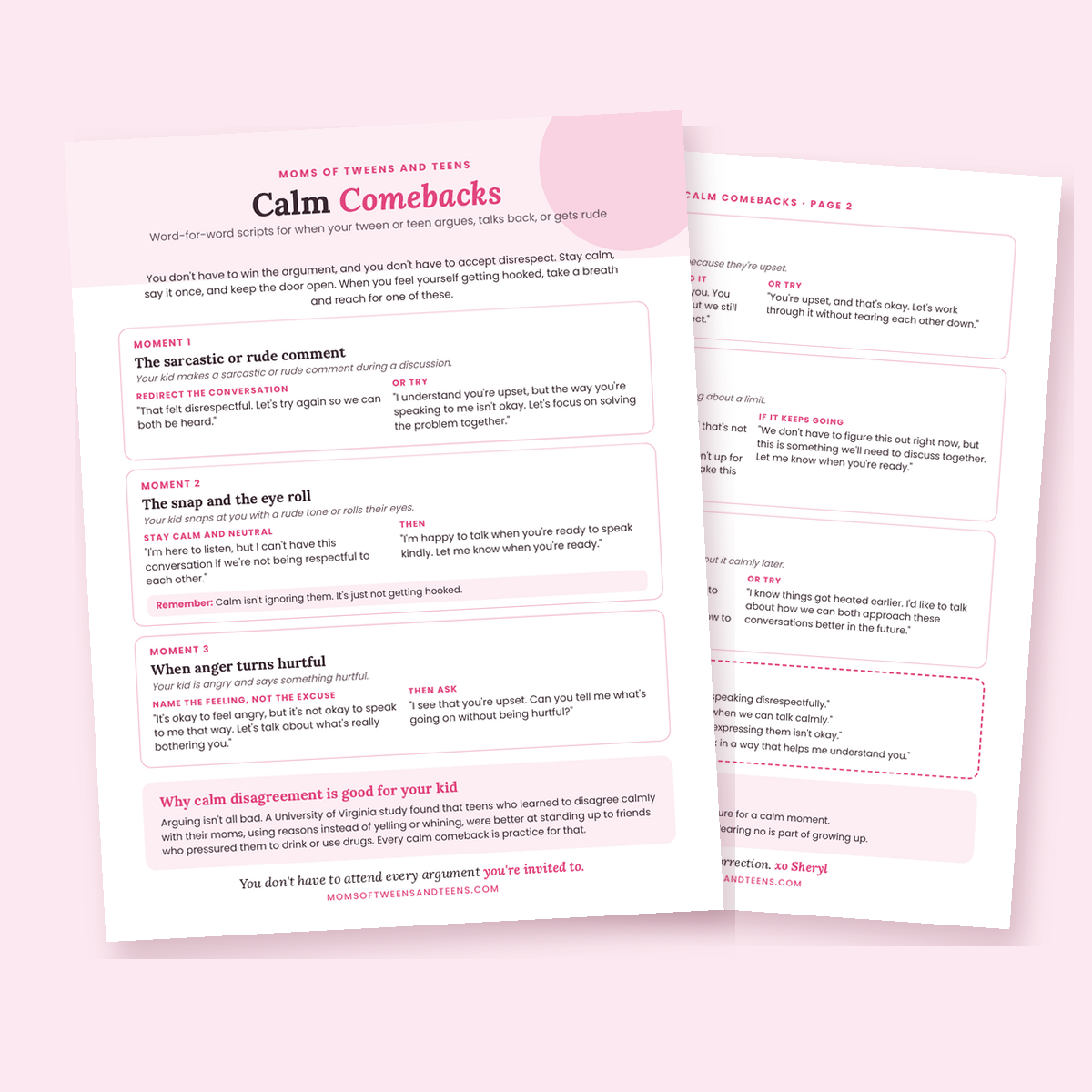
Word-for-word scripts for the 6 toughest moments, from the eye roll to “You’re always on my case!”, plus how to repair after a blowup.
5 things to do the next time your teen disagrees with you
1. Stay cool and calm
Take a breath before you answer. Lower your voice instead of raising it. If you feel yourself getting heated, it’s okay to step away and come back.
With a tween: “I’m happy to talk when you’re ready to speak kindly. Let me know when you’re ready.”
With a teen: “I understand you’re upset, but the way you’re speaking to me isn’t okay. Let’s focus on solving the problem together.”
2. Listen to them and hear their side
Let them finish. Ask a question before you give an answer. Feeling heard often takes the heat out of an argument, even when the answer is still no.
Try saying: “I care about what you’re saying, so let’s talk in a way that helps me understand you.”
3. Applaud them for sharing their opinion
When your kid makes their case calmly and with good reasons, tell them. That’s exactly the skill that helps them stand up to peer pressure later.
Try saying: “I don’t agree, but I really like how you explained that. You made a good case.”
4. Let them be unhappy or angry with you
Rather than explaining your reasoning over and over, allow your teen to be unhappy, disappointed, or even angry with you. Remember, it is okay for them to be unhappy or angry with us! Name the feeling without accepting disrespect.
Try saying: “It’s okay to feel angry, but it’s not okay to speak to me that way. Let’s talk about what’s really bothering you.”
5. Remember they need to hear no
Remind yourself that they need to hear NO and face disappointment. The world often will not explain itself to them. Small disappointments now build the resilience they’ll need later.
And if things do get heated, circle back later. Repair is one of the most powerful things we can model.
Try saying: “I know things got heated earlier. I’d like to talk about how we can both approach these conversations better in the future.”
When is it more than normal arguing?
Some pushback is a normal part of growing up. Reach out to your kid’s doctor, a school counselor, or a family therapist if arguments turn into threats, pushing, hitting, or breaking things; if your tween or teen seems angry or irritable most of the time; if they’ve pulled away from friends and things they used to enjoy; or if you suspect drinking or drug use. If your kid ever talks about feeling hopeless or hurting themselves, call or text 988 for the Suicide & Crisis Lifeline. For help with substance use, call the SAMHSA National Helpline at 1-800-662-4357.
Questions moms ask about arguing with teens
Is it normal for my teen to argue about everything?
Yes, it’s very common. Tweens and teens are building their own identity, and disagreeing with us is part of that. What matters most is how the arguing happens: calm, respectful disagreement is healthy, and yelling or insults on either side is what to work on.
How do I stop arguing with my teenager?
Decide ahead of time that you won’t take the bait. Stay calm, explain yourself once, listen to their side, and then let your decision stand. If either of you gets heated, take a break and come back to it later.
What do I say when my teen is disrespectful during an argument?
Name it calmly and give them a chance to try again: “That felt disrespectful. Let’s try again so we can both be heard.” If it keeps going, pause the conversation until you can both talk respectfully. Here are more ways to respond to disrespectful teens.
Should I ever let my teen win an argument?
Yes, sometimes! If your kid makes a respectful, well-reasoned case, it’s okay to change your mind and tell them why. It teaches them that calm reasons work better than yelling. On safety and family values, you can listen with empathy and still hold the line.
It’s not about having the last word
Stay calm. Explain yourself once, then stop. Listen more than you talk. Show empathy without giving in. The goal isn’t to win the argument but to keep a healthy relationship where your tween or teen feels heard and respected.
Remember, it’s not about having the last word; it’s about building a bridge of trust and communication with your kid. So take a deep breath, stay cool, and focus on connection over correction. Practicing these things will strengthen your bond in the long run, in ways you’ll both appreciate for years to come.
I’m praying for peace in your home, Mama. For more support, read How to Parent a Strong-Willed Tween or Teen, 5 Reasons Why Your Teen Is Disrespectful and Defiant, and How to Stop the Nightly Homework Fight With Your Tween or Teen.
xo Sheryl
Mama, you don’t have to do this alone
Join real moms who get it in the Moms of Tweens and Teens community. Ask questions, share what’s working, and get support from moms raising tweens and teens right alongside you, with live workshops and time with me.
Free: Calm Comebacks scripts
Know exactly what to say when your tween or teen argues, talks back, or gets rude. Word-for-word scripts for 6 tough moments, plus how to repair after a blowup.
About Sheryl Gould: Sheryl is the founder of Moms of Tweens and Teens and a Parent and Relationship Coach with 18 years of experience helping moms stay connected to their kids through the tween and teen years. She’s a mom of three, author of SOS! The Technology Guidebook for Parents of Tweens and Teens, and host of the Moms of Tweens and Teens podcast.


One Comment
Comments are closed.